









This November, Tabor will be presenting Clue, a humorous murder mystery based on the popular board game made in the 1940s. While the audience is enjoying the entertaining performance, wouldn’t you like to better understand the dedication that goes into producing such an amazing performance?
Actors:
The actors break up their day based on the scenes that need to be practiced during their time together. The scenes are picked based on how smoothly the transitions are, how well the actors deliver their lines, or which scenes are yet to be practiced. Overall, the scenes are picked based on overall readiness among the cast and crew.
The actors begin every rehearsal with a quick warm-up and a fun game before diving into the scenes they need to cover for the day. After the exercise, actors get into positions and begin practicing the scenes they are assigned for most of the rehearsal. If an actor is not on stage, they are most likely in the wings, running through lines or trying to remember their cues quietly so those on stage can focus.
One of the most important things an actor must do is get into character and stay in character throughout rehearsal. There are many different techniques to get into character, such as method acting or feeding off other actors’ energy. Gray Liu ’27 likes to take advantage of one of her character’s accessories.
“The props my character uses and the shoes she wears help me match the vibe of what my character is meant to be,” Liu says.
When showtime is on the horizon, the actors run through the entire play from start to finish. These run-throughs allow everyone involved to remember their cues and really practice scenes that need polishing. Run-throughs are a stressful time because the cast and crew must go through the entire show without breaks and keep track of sections that need to be tweaked without going over time.
Sarah Bonsey ’28 shares one of the hardest parts of run-throughs for her: “Being able to fake your face while staying in character throughout the entire scene is very difficult; the human in you wants to sit down or get distracted,” Bonsey says.
Sound:
The sound crew is sometimes found in the North Classroom. However, the sound crew usually stays with the actors in the lighting booth. It’s important for sound to work closely with the actors, since the sound effects are important cues.
Searching for sound effects can be a daunting task, especially for a production like this, which uses around 70-80 individual sound effects for the play. Minyoung Park ‘26, the lead of sound design, searches for sound effects as part of his role.
“Most of the effects I need are on YouTube. However, for very specific sounds, I’d have my own meeting with Mr. Babbitt, and we’d record very specific sounds that we need,” he explains.
In addition to finding the sound effects, those same effects need to be edited to fit the length of the scene and fine-tuned to cut unnecessary audio out. When asked about the length of the editing process, Park says, “I usually edit based on feedback given during rehearsal because the sound effects I edit originally might sound different in the speaker, which is what the audience will hear.”
Every member of the fall drama has their own favorite part of being in the program. Park’s favorite part is interacting with the actors.
Set/Costume:
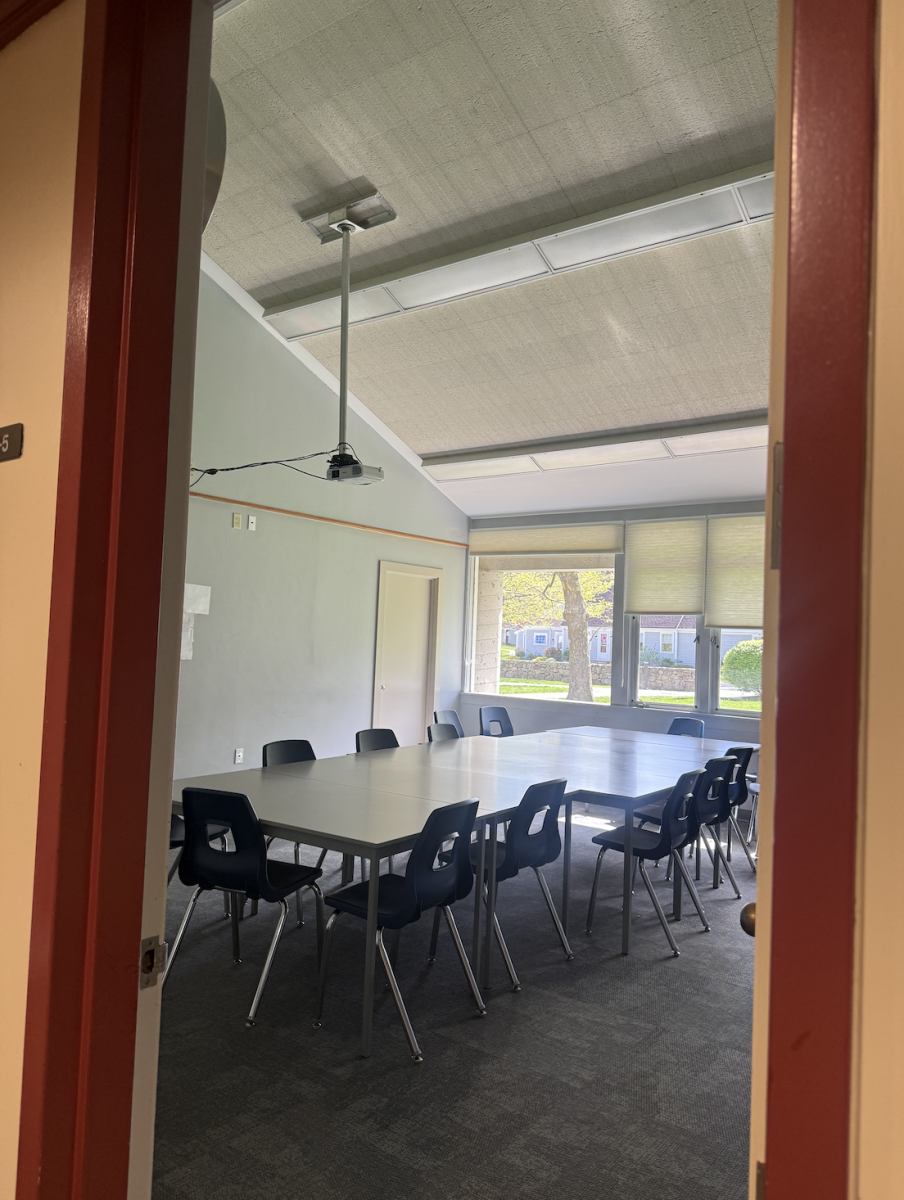
While the actors are rehearsing on stage and the sound crew is with them, the set and costume crew are hard at work in the Northern Classroom. They use the space to post mood boards, paint set pieces, and organize any clothing items or props that are used throughout the show.
When it comes to figuring out set design or costume pieces, there is a process that must be followed before anything can be pulled out of the costume closet or purchased online.
Reem Al Ismali ’26, member of the set and costume crew, explains, “We look at the story as a whole and discuss the events that would happen to see what fits for the set and props, mainly because many items and props are mentioned in the scene or get lost along the way.”
Additionally, the process for both mediums needs inspiration. Without a model to guide the costuming and setting process, it is hard to keep pieces and outfits authentic to the mood and time period of the play. Al Ismali notes, “We mainly used a lot of inspiration from the board game and playing guards.”
Whether it was the hard work needed to complete the project or the materials used to create the perfect piece, the costuming and set crew tend to have a favorite piece or outfit.
Al Ismali explains that her favorite set piece was the doors. “We had to make indents for the doors completely blind! We had no clue how it would really look, so seeing the finished product felt like an accomplishment.”
Her favorite costumes to design and work on are the characters Ms. Green and Ms. Scarlett.
“Funnily enough, they were both the most difficult to work on yet some of the best to work on,” Al Ismali says.
At the very end of rehearsal, the actors gather their things and form a circle. Ms. Hawley, one of the directors, and Sue Zhao ’26, the stage manager, go over notes from the entire day and explain what will be done for the next practice. The cast leaves the black box joking and smiling, proud of what they have accomplished and ready for the day ahead.
Fall Drama presents Clue on Thursday, November 7, until Saturday, November 9, at 7:30 PM. The show will be presented in the black box theater (upstairs in Hoyt). Please support the cast and crew for all their hard work this fall season, and don’t forget to grab a ticket (they’re free!)