


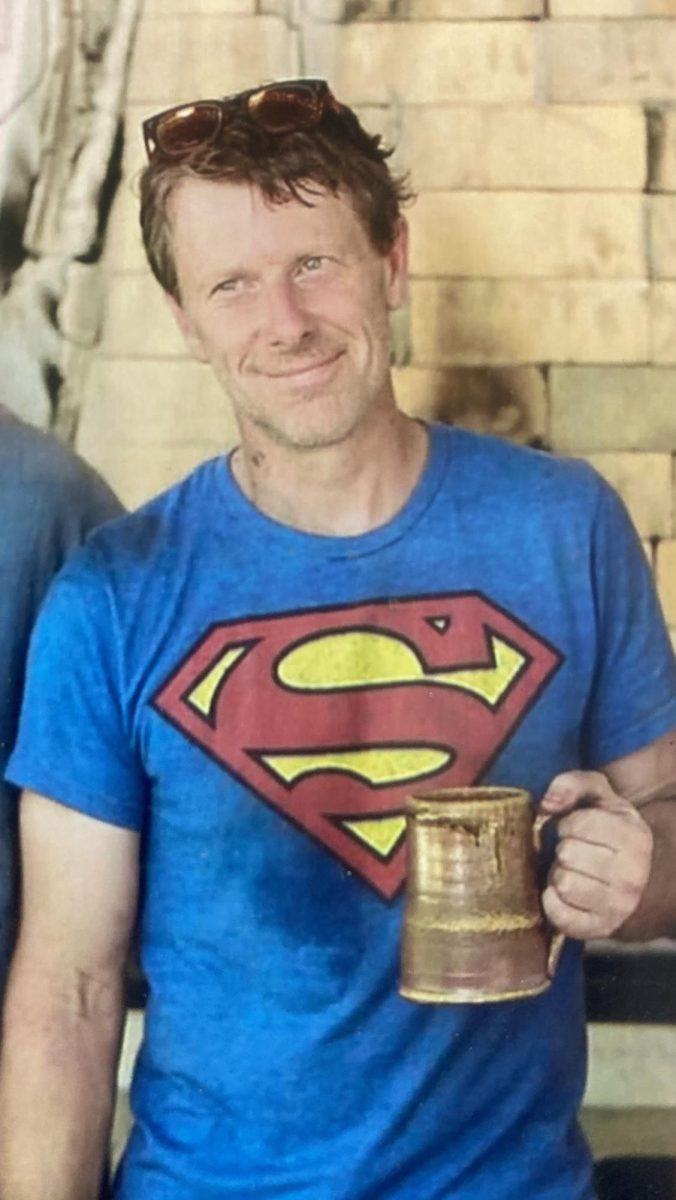
In the Braitmayer building, Mr.Arnfield is known not just for his love of ceramics but also for the way he encourages students to slow down, observe, and rethink how they see themselves and the world around them. After more than two decades at Tabor Academy, he has become an active presence in the school’s art community, someone who sees ceramics and art less as a craft to master and more as a way of thinking.
Below is my conversation with him about food, advice, teaching, and personal growth.
P: What is your favorite dish in the dining hall and why?
A: My favorite used to be the spinach-and-cheese crêpes. They were rolled up and topped with balsamic. They were delicious, and I missed them.
P: What is a piece of advice you often find yourself repeating?
A: I often remind students that they are not “special” in the sense that they may have been told while growing up. They are human beings like everyone else, and that perspective matters.
In places like boarding schools, there can sometimes be a culture of elitism or superiority. I think it is important to challenge that mindset and keep people grounded. Kindness and humility matter far more than status, and these values help students to understand themselves holistically.
P: What do you hope students remember about your classroom years after leaving Tabor?
A: I hope they remember that art is an important and unique form of communication beyond the classroom.
I also hope they leave with a greater perception of the world around them, whether through art, nature, architecture, or everyday life. Art reflects both joy and sorrow, and I hope students carry with them that awareness of beauty and emotions in the things around them.
P: How has your experience at Tabor influenced you as a person beyond teaching?
A: I’ve been in Tabor for 23 years. One of the biggest ways this place has changed me is that it has helped me become more comfortable with myself.
When I was younger, I was extremely shy and introverted. Working in such a people-centered environment has helped me become more open, empathetic, and caring. This growth of opening myself up to be more active is the greatest gift Tabor has given me.
P: What do you notice in students that they don’t always notice in themselves?
A: Students at Tabor often feel as though they have their life figured out before them, as their adolescence is all about wanting to grow up and experience adulthood. This is just not the case; I’m almost 60 and still can’t figure out some things. Students your age should be open to the possibilities that come your way and realize that not everything will be in your control. I think it’s important for them to stay flexible and open to possibilities. Life is unpredictable, and learning to adapt is one of the most valuable things one can do.