






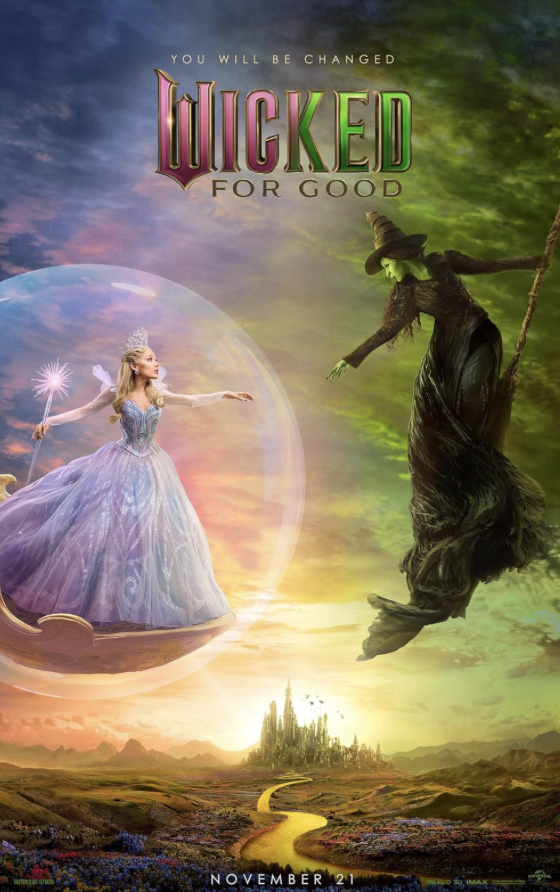
The second Wicked movie continues the story of Elphaba and Glinda with a darker, richer tone that sets it apart from the first film while still keeping its emotional core intact. From the opening scenes, the sequel leans heavily into the consequences of everything the characters faced previously, showing how Oz is changing and how both women are forced to decide who they want to be in a world that has already labeled them. The mood is more serious, the stakes feel higher, and the film gives its characters room to grapple with guilt, loyalty, and the price of doing what is right, even when the world insists it is wrong.
The acting is one of the film’s strongest qualities. Cynthia Erivo delivers a powerful performance as Elphaba, capturing her strength, frustration, and deep compassion. Her portrayal is emotional without ever being melodramatic, and she makes Elphaba’s internal battles feel real and grounded. Ariana Grande, returning as Glinda, gives a far more layered performance than the bubbly persona of the first film. She shows Glinda struggling with the responsibility and privilege that come with her public image, and her guilt about the past adds depth to her character. The chemistry between Erivo and Grande remains the emotional heart of the story, and their scenes together carry both warmth and heartbreak. Supporting actors like Jonathan Bailey, Michelle Yeoh, and Jeff Goldblum add personality and energy to their roles, helping bring out the political tensions and moral complexity that run throughout the film.
Director Jon M. Chu brings the same cinematic ambition as he did in the first installment, but here he leans toward a more dramatic and somber approach. His direction highlights the loneliness and pressure both main characters face, using wide, sweeping shots of Oz to emphasize how small they often seem against forces bigger than themselves. Chu balances large, magical set pieces with intimate, dialogue-driven moments that explore friendships cracking under pressure and the weight of choices that cannot be undone. While the pacing slows in the middle, especially as the film expands shorter stage material into a full storyline, the emotional payoff in the final act makes the deliberate storytelling worthwhile.
Music remains essential to the experience, and the singing in this film is simply outstanding. Erivo’s voice is powerful and resonant, bringing raw emotion to songs that demand intensity, while Grande’s bright, precise vocals give her character’s numbers clarity and vulnerability. New songs blend smoothly with the original musical’s tone, even if none reach the iconic level of “Defying Gravity.” The choreography is more restrained than in the first movie, fitting the heavier emotional themes, but still beautifully staged. Instead of huge ensemble dance numbers, the sequel often relies on movement that feels symbolic or tied to the characters’ inner states, making the musical moments feel more narrative-driven and less showy.
Visually, the movie is stunning. The costumes, in particular, are a highlight, using color and detail to express character development. Glinda’s extravagant gowns keep their signature sparkle but gradually take on a more muted elegance, reflecting her shift from carefree socialite to someone aware of the cost of her influence. Elphaba’s darker, sharper costumes convey her increasing isolation and strength as she grows into the figure the world insists on calling
“wicked.” The world of Oz itself is beautifully designed, blending magical elements with political undertones through set pieces, props, and lighting that reflect the story’s increasingly serious direction.
Thematically, the film dives deeply into ideas of truth, perception, and what it means to be good. It challenges the easy labels of “hero” and “villain” by showing how often powerful people manipulate these categories to maintain control. Elphaba becomes a symbol of resistance, not because she seeks power, but because she refuses to accept cruelty disguised as order. Glinda’s journey, meanwhile, revolves around recognizing how silence and comfort can allow injustice to grow. Their friendship becomes the emotional lens through which the story examines how two people can love each other yet choose very different paths in the face of fear and responsibility.
The plot itself follows the musical’s second act closely but expands it to give more context and emotional clarity. As the Wizard tightens his control over Oz, Elphaba challenges his corruption, becoming a target of propaganda and fear. Glinda, caught between public expectation and personal loyalty, finds herself drifting away from Elphaba even as she still cares for her. The climax brings their stories to a dramatic resolution filled with both loss and hope, creating a bittersweet ending that honors the original musical while deepening the characters’ emotional journeys. The final scenes highlight forgiveness, the cost of truth, and the complicated ways love can stay alive even when two people must go separate ways.
Overall, the second Wicked movie stands as a powerful continuation and conclusion to the story. It may not be as bright or whimsical as the first, but its emotional depth, strong performances, dazzling visuals, and thoughtful themes make it a memorable and meaningful sequel. It brings the world of Oz to life with more maturity and weight, delivering a finale that feels both satisfying and reflective, leaving a lasting impression long after the final song ends.